

In 2025, the travel and tourism sector continued its upward trajectory, making a substantial impact...
The European Commission presented its new EU Sustainable Tourism Strategy on 4 November 2026, setting out a roadmap to strengthen the competitiveness, sustainability and resilience of European tourism. The EU Tourism Strategy 2026 outlines priorities that will shape how tourism boards, destinations, attractions, and museums manage tourism and improve visitor experiences. However, turning these policy ambitions into practical action requires accessible digital tools, better use of data and collaboration across the tourism sector.
Let's analyze the strategy's main priorities, review how tourism organizations can implement them, and how to take part in the €14.5 million Horizon Europe funding opportunity opening in May 2027.
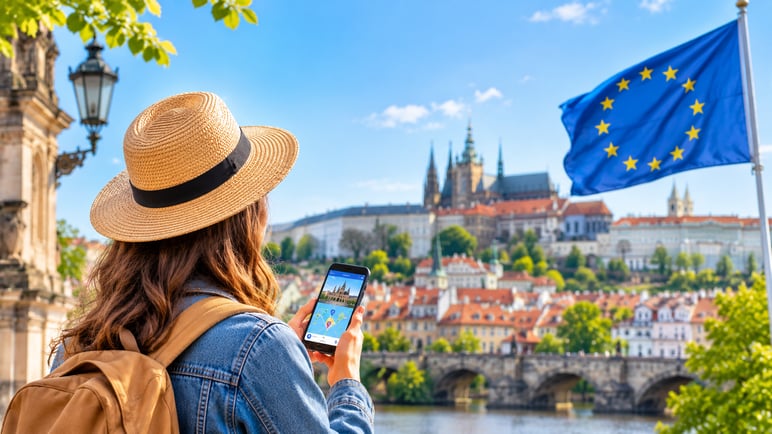
AI-generated
What are the main priorities of the EU sustainable tourism strategy?
The EU Tourism Strategy 2026 identifies six strategic goals and organizes its proposed measures into three main pillars, covering ten action areas, as outlined in the official strategy document.
These priorities address key challenges facing the tourism sector, including digital change, environmental sustainability, visitor management, skills development and international cooperation. For tourism boards, destinations, museums and attractions, understanding these priorities is an important first step towards planning their EU tourism strategy implementation.
Pillar I. - Boosting the competitiveness of EU tourism
The first pillar focuses on strengthening Europe's position as a competitive tourism destination while helping tourism businesses adapt to changing visitor expectations and technological developments. It includes four action areas:
1. Enabling SMEs to thrive
The strategy aims to create better conditions for small and medium-sized tourism businesses through collaboration, simplified processes and opportunities for growth. Supporting SMEs is important because many local tourism experiences, attractions and services are provided by smaller organizations.
2. Data, digitalization and innovation
Digital advancement is a central priority of the strategy. It encourages tourism organizations to adopt digital technologies, make better use of data and explore new approaches, including artificial intelligence. These tools can help destinations improve visitor experiences, understand tourism patterns and make more informed management decisions.
Rather than developing new technology from scratch, organizations can also build on existing digital solutions, such as SmartGuide audio guide platform, to support relevant priorities.
3. Skills and talent for tourism
The strategy recognizes the importance of developing skills and attracting talent across the tourism sector. As the industry becomes increasingly digital, tourism professionals need relevant skills to work with new technologies, manage changing visitor expectations and support sustainable tourism development.
4. Smooth and sustainable connectivity and infrastructures
Improving connections between destinations and developing sustainable infrastructure are also key priorities. The strategy highlights the importance of making travel easier while supporting more sustainable transport options and better access to tourism services.
Pillar II. - Strengthening sustainability and building resilience
The second pillar focuses on reducing tourism's environmental impact, improving destination management and making the sector more inclusive and resilient. It covers four action areas:
5. Clean and circular transition
The EU aims to accelerate the tourism sector's transition towards cleaner and more circular practices. This includes reducing waste, using resources more efficiently and encouraging businesses to adopt environmentally responsible operations.
6. EU model for tourism management
The strategy promotes a more coordinated approach to managing tourism destinations. This involves balancing visitor numbers, protecting local communities and cultural heritage, and encouraging visitors to explore a wider range of places rather than concentrating only on the most popular attractions.
7. Advancing tourists' rights, affordability and inclusive tourism
Tourism should be accessible to a wider range of people, regardless of their circumstances or abilities. This action area focuses on protecting tourists' rights, improving affordability and making tourism experiences more inclusive.
8. Strengthening resilience, crisis preparedness and responsiveness
The strategy also aims to help tourism organizations prepare for and respond to unexpected challenges, including economic disruptions, environmental events and other crises. Greater resilience can help destinations protect their tourism businesses, communities and long-term development.
Pillar III. - Enhancing international cooperation and outreach
The third pillar highlights the importance of cooperation beyond individual destinations and countries. It includes two action areas:
9. International cooperation and outreach
The EU aims to strengthen cooperation with international partners and promote Europe as a competitive and sustainable tourism destination. This includes sharing knowledge, encouraging collaboration and supporting the development of sustainable tourism practices globally.
10. Ensuring investment, governance and cooperation
Successful implementation of the strategy requires investment, effective governance and cooperation between public authorities, tourism businesses, research organizations and other stakeholders. EU funding programmes and collaborative projects can help turn strategic priorities into practical initiatives.
For destination management organizations and tourism businesses, particularly small and medium-sized enterprises (SMEs), the strategy highlights the importance of improving access to digital tools, data and relevant skills. It also encourages better visitor-flow management and the promotion of tourism throughout the year, rather than concentrating activity in a few popular locations or peak seasons.
How can tourism organizations implement the EU tourism strategy with existing digital tools?
Existing digital platforms can help tourism institutions put EU Tourism Strategy policy priorities into practice by improving access to cultural information, supporting visitor distribution and making better use of tourism data.
For destinations and attractions the right digital platforms can support specific goals such as multilingual and special needs accessibility, digitalization and more balanced destination management. SmartGuide offers several practical applications in these areas through its digital guide platform, AI-assisted content tools and visitor analytics. Here is how:
1. Make cultural experiences available in more languages
A destination may already have valuable stories in existing texts, printed brochures and the knowledge of local experts. The opportunity is to make this content accessible and easy to use for international visitors.
SmartGuide’s digital guides support text and audio in more than 30 languages, with AI-assisted translation and content management tools. Visitors can access a guide through a QR code in their browser, while the native app also offers offline access and background audio.
For example, a regional museum could turn its existing interpretation into a multilingual audio guide and connect it with nearby heritage sites, allowing international visitors to explore local culture in their preferred language.
Local experts should review the stories and translations to maintain cultural meaning and accuracy. This approach makes it easier for destinations to reach visitors in more languages while keeping local knowledge at the center of their content.
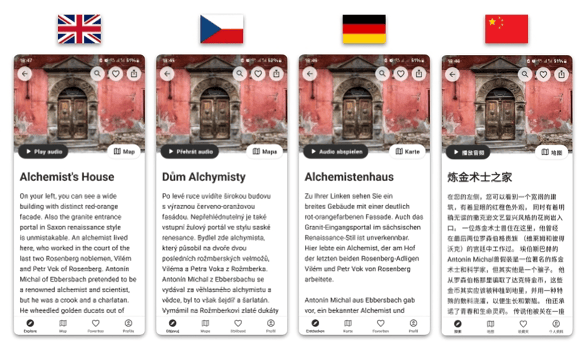
SmartGuide's AI translations
2. Help visitors discover more of the destination
Encouraging visitors to explore beyond popular landmarks can help distribute tourism activity more evenly across a destination or a region.
For example, a destination could connect a busy attraction with a nearby neighborhood walk, a smaller museum or typical local businesses. In rural areas, thematic routes could link several villages and encourage visitors to explore more of the region. SmartGuide’s tools for destinations make it easier to create and publish these routes, helping visitors discover places they might otherwise overlook. Seasonal guides could also draw attention to attractions and activities available outside the peak summer period.
Personalized AI-powered recommendations can further support discovery by suggesting places based on visitors’ personal tastes and preferences. SmartGuide's recommendations help travelers find places that match their interests, including lesser-known spots and hidden gems they might not have come across on their own.
To make these initiatives effective, destinations should work with local stakeholders when selecting routes. This means considering the capacity and opening hours of attractions, as well as residents’ priorities. Routes should direct visitors towards places that are ready and willing to welcome them. By monitoring route usage and visitor interest, destinations can assess whether these initiatives are encouraging exploration of less-visited areas.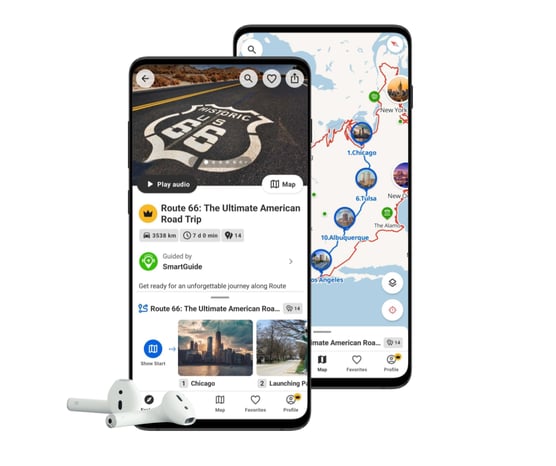
Route 66 -American Road Trip - Example of country-wide tour in SmartGuide digital audio guide
3. Give smaller attractions access to digital tools
Small destinations, museums and attractions often have limited budgets and staff to develop and maintain their own digital services. They need accessible tools that make it easy to publish, update and share visitor information without having to build a platform from scratch.
SmartGuide’s content management system provides an existing platform where organizations can create and manage digital guides. A regional or national tourism board can use it to bring information from multiple attractions together in one connected visitor experience, making local sites easier to discover. For example, a regional tourism board could bring together a local history museum, a small archaeological site, a traditional craft museum and a nearby heritage attraction in one digital guide. Visitors could use a single platform to discover all participating sites, access information about their history and opening hours, and follow suggested routes connecting them with engaging audio stories.
Destinations can begin by adapting their existing content, selecting the languages most relevant to their visitors and sharing the guide through websites, visitor centers, accommodation partners and QR codes at places of interest.
This approach helps smaller organizations become part of a destination-wide digital offer while giving visitors easier access to information about local attractions and cultural sites without having to develop and maintain their own applications.
4. Use visitor insights to improve destination management
Better use of data is an important part of the EU's approach to tourism management. Destinations need reliable information to understand visitor interests, assess how well their content performs and identify areas that may need improvement.
SmartGuide provides visitor analytics, incl. big data dashboards and heatmaps that help organizations understand how visitors interact with digital guides and which locations attract their attention. The analytics can also show which guides are used most frequently, provide insights into visitor demographics and indicate which languages visitors select when accessing content.
These insights help destinations understand their audiences, evaluate the performance of different guides and make informed decisions about the content and attractions they promote. For example, a tourism board could compare engagement with well-known landmarks and lesser-known heritage sites to see whether visitors are discovering the wider destination. Based on these findings, it could adjust its recommendations, improve underused content or give more visibility to places that visitors may be overlooking.
Combining guide analytics with other sources of information, such as attraction footfall, feedback from local businesses and residents' views, can give destinations a more complete picture of tourism activity and support better decisions about future development.
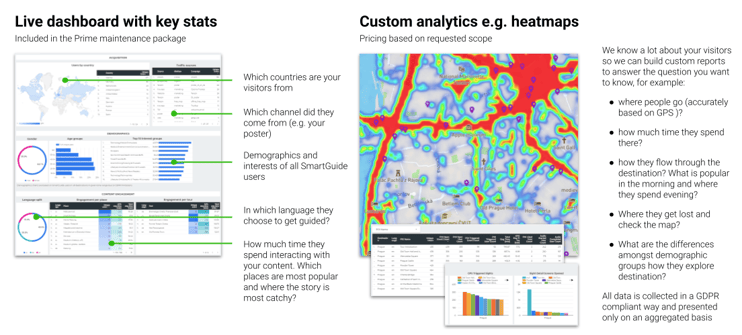
SmartGuide's data analytics tools - data dasboards and GPS heatmaps
Together, these examples show how existing digital tools can help tourism boards, destinations, and attractions put the EU Tourism Strategy into practice, from improving multilingual accessibility and promoting lesser-known attractions to supporting data-driven destination management and sustainability. SmartGuide combines AI-powered features, digital guides and visitor analytics in one platform, offering practical solutions. Its approach is also recognized as a best-practice example on the EU Tourism Platform, highlighting how digital platforms can connect travelers with destinations.
EU tourism funding 2027 - €14.5 million available through Horizon Europe
The EU is preparing a new funding opportunity for organisations working in sustainable cultural tourism. Under the Horizon Europe programme, the topic Future-proofing Sustainable Cultural Tourism will support collaborative research and innovation projects exploring how cultural tourism can respond to technological, environmental and social changes.
With a total indicative budget of €14.5 million, the call offers an opportunity for tourism organizations, cultural institutions, universities and technology providers to work together on research and actionable approaches. It focuses on two research directions: the integration of AI and strategic foresight in cultural tourism, and sustainable tourism development in emerging and less-developed destinations.
Key Details of the Horizon Europe Tourism Funding Call
The funding opportunity falls under Horizon Europe's Culture, Creativity and Inclusive Society cluster. It is a Research and Innovation Action (RIA), with funding provided as a lump sum. The European Commission expects to support three projects, with an estimated EU contribution of €4–4.8 million per project.
| Funding detail | Information |
|---|---|
| Programme | Horizon Europe |
| Topic | Future-proofing Sustainable Cultural Tourism |
| Topic ID | HORIZON-CL2-2027-01-HERITAGE-06 |
| Total indicative budget | €14.5 million |
| Expected EU contribution per project | €4–4.8 million |
| Expected number of projects | 3 |
| Opening date | 13 May 2027 |
| Application deadline | 23 September 2027, 17:00 Brussels time |
| Funding type | Research and Innovation Action (lump sum) |
Organizations interested in applying should consult the official Horizon Europe Funding & Tenders Portal for the latest application conditions and submission requirements. The relevant scope and requirements are also outlined in the Horizon Europe Work Programme 2026–2027.
What research areas does the funding support?
The call identifies two research directions. Applicants should select one of these focuses and develop a proposal that addresses its objectives, alongside the topic's overarching expected outcomes.
Focus 1: AI integration and participatory foresight
The first focus explores how artificial intelligence and emerging technologies can contribute to more resilient, inclusive and sustainable cultural tourism. It also looks at how tourism stakeholders can use foresight methods to anticipate future challenges rather than responding only after they occur.
Potential research activities include:
- Exploring ethical and inclusive applications of AI in cultural tourism.
- Using AI tools to improve visitor information, accessibility and destination management while respecting cultural authenticity.
- Developing AI-assisted foresight methods to anticipate changes in visitor behavior and future tourism challenges.
- Combining data analysis with participatory workshops involving local communities, tourism authorities and cultural organizations.
- Investigating how predictive tools can help destinations understand and manage visitor pressure.
Focus 2: Sustainable tourism in emerging and less-developed destinations
The second focus looks at how cultural tourism can support sustainable local development, particularly in emerging destinations and less-developed regions. It emphasizes community participation, cooperation between regions and fair distribution of tourism benefits.
Potential research activities include:
- Developing community-centered models for sustainable cultural tourism.
- Creating strategies that support local economies, cultural heritage and regional development.
- Exploring cross-border partnerships between destinations and tourism stakeholders.
- Identifying regenerative tourism practices that protect cultural and natural resources.
- Improving knowledge sharing, skills development and fair distribution of tourism benefits between local communities and other stakeholders.
Both research directions aim to produce evidence-based recommendations that can help policymakers and tourism stakeholders integrate cultural tourism into wider sustainability, environmental protection and social inclusion strategies.
Who can participate in these EU-funded projects?
The call creates opportunities for collaboration between different organizations involved in tourism, cultural heritage, research and technology. Since the projects are expected to address complex challenges, proposals can benefit from combining academic knowledge, practical destination experience, digital expertise and local community perspectives.
Potential consortium partners may include:
- Destination management organizations (DMOs): Coordinate destination-level activities and provide access to tourism networks and pilot locations.
- Tourism boards and local authorities: Contribute policy knowledge and support the implementation of sustainable tourism strategies.
- Museums and cultural heritage organizations: Provide cultural knowledge, heritage content and locations for testing project activities.
- Universities and research institutions: Lead research, develop methodologies and evaluate project outcomes.
- Technology companies: Contribute digital platforms, AI capabilities, data tools and technical expertise.
- Local communities and tourism stakeholders: Share local knowledge, participate in planning and help ensure that proposed solutions address community needs.
The exact eligibility conditions and consortium requirements depend on the call rules. Organizations should review the official topic documentation before forming a partnership or preparing an application.
Horizon Europe grants fund collaborative research, not software purchases
One important distinction is that this Horizon Europe opportunity is designed to fund research and innovation projects, not the purchase of existing tourism software or mobile applications.
Proposals must address the objectives and expected outcomes of the selected research focus. This means that simply purchasing a digital guide platform or subscribing to an existing software service would not, by itself, meet the purpose of the call.
Instead, projects are expected to involve activities such as research, technology development or adaptation, pilot testing, stakeholder participation and evaluation. Technology providers can potentially participate as consortium partners, contributing existing infrastructure, technical expertise and solutions that support the project's research objectives.
For example, a project exploring AI-supported visitor management could involve a university researching visitor behavior, a destination testing new approaches, museums providing pilot locations and a technology partner supplying the digital tools needed to test and evaluate the proposed solutions.
The aim is to develop and assess approaches that can contribute to sustainable cultural tourism, with findings that can inform future policies and practices.
What could a project with SmartGuide look like?
A possible project could bring together destinations, cultural institutions, a research partner, local communities and SmartGuide as a technology partner.
The consortium could investigate, for example, how multilingual interpretation and AI recommendations influence cultural discovery and visitor choices. Local stakeholders could help define desirable tourism scenarios, identify suitable places to promote and assess the recommendations.
SmartGuide’s existing tools could provide a basis for visitor-facing pilots. Research partners could design the evaluation, compare results across destinations and develop recommendations for wider use.
This gives each participant a clear role: destinations bring real challenges, communities shape priorities, researchers evaluate outcomes, and a technology partner supports practical implementation.
Are you ready to turn the EU strategy into a practical destination project?
The EU Tourism Strategy 2026 sets a clear direction for making European tourism more competitive, sustainable and resilient. Turning its priorities into action will require cooperation between destinations, cultural institutions, local communities and technology providers. However, organisations do not necessarily need to develop new technology from scratch. Existing platforms such as SmartGuide can help destinations improve multilingual access to cultural information, encourage visitors to explore beyond popular attractions and use visitor insights to inform destination management.
For organisations interested in taking these efforts further, the €14.5 million Horizon Europe funding opportunity offers scope to collaborate on research and new approaches to sustainable cultural tourism. By combining existing solutions with local knowledge, practical initiatives and research partnerships, destinations can start putting the strategy into practice today.
Planning a digital visitor experience or a Horizon Europe consortium? Talk to SmartGuide about multilingual cultural interpretation, visitor insights and pilots using tools already available.
Bring your destination goals and existing content, and we can explore how SmartGuide could support implementation.

