.png?width=300&height=69&name=Logo%20SmartGuide%20horizontal%20(1).png "SmartGuide")
In today's changing world of tourism, it's important to adapt and embrace technology to stay...
New technology often brings the same question to those employed in the travel industry: “Will this replace humans?” With AI-powered digital audio guides and tour guide apps becoming more common, many tour guides are wondering what this shift really means for their work. The truth is simple: AI won’t replace great guides — but it will replace the big, generic, headset-style tours that few travelers actually enjoy. At the same time, it’s opening up new opportunities for skilled guides to earn more, reach a wider audience, and work with greater freedom than before.
Let's explore why AI is not a threat to live guiding, how digital tools are changing outdated tour models, and where human guides continue to shine. We'll also explain how AI-based digital audio guide platforms like SmartGuide help guides scale their knowledge, reduce repetitive work, and create new income streams without losing their personal storytelling style.

Image downloaded from iStock
The myth: AI will take my job as a guide
Many guides worry that AI will push them aside, and at first glance, it seems possible. Today’s digital tools can explain history and context in multiple languages, trigger stories automatically through GPS, and answer common questions anytime on a visitor’s phone. So it’s natural for guides to ask, “If an app can talk, why would anyone pay me?”
The thing is, guiding has never been about listing facts. What people remember most comes from skills only humans carry: sensing the mood of a group, adjusting plans when crowds or weather shift, and creating small, personal moments that make guests feel welcome and emotionally comfortable. A good guide can turn a joke, a question, or an unexpected situation into something guests talk about long after the trip ends, and remember even years later.
What AI handles well is the repetitive part of guiding — repeating the same introductory facts to large groups or sticking to a strict, scripted route. They reduce pressure on guides, leaving room for richer interactions. They can also help by warming up visitors before a live tour, supporting accessibility needs, providing multilingual assistance, and giving travelers basic orientation so guides can focus on deeper storytelling and personal engagement. So, instead of job position elimination, there is synergy: the human-AI partnership helps deliver a smoother, more enjoyable experience for both guides and guests.
The limitations of old-style group tours
Big group tours often end up being a compromise that fails to satisfy almost anyone: travelers, guides, and residents alike. Tourists get shuffled through narrow streets on strict schedules, hearing the same lines over headsets while moving in large, slow-moving crowds. Guides spend hours repeating identical scripts to dozens of people with minimal personal interaction. Meanwhile, locals find their daily paths blocked by groups of 40 or more tourists lingering in historic squares.
Cities around Europe are starting to push back. For example, Venice has introduced new rules limiting tour groups to 25 people and banning loudspeakers to reduce congestion and noise pollution in its historic center and surrounding islands. Similarly, Dubrovnik has recently restricted walking-tour group sizes to a maximum of 15 people to manage visitor impact on its old town and infrastructure.
When you think about it, many large group tours are already semi-digital:
- Travelers follow someone holding a flag or an umbrella rather than choosing their own way.
- They listen via headset rather than interacting directly with the guide.
- The guide becomes more of a repetitive broadcaster than a storyteller or a host.
In that setting, the supposed value of a live guide, interaction, flexibility, and personal attention often gets lost. Instead, guides cost more, block public spaces, may speak only one or two languages at most, and have to repeat identical content again and again.
By contrast, a high-quality digital guide working through a smartphone can offer something better: flexible timing, multilingual narration for mixed groups, less disruption to locals, and a more visitor-friendly pace. This makes digital guides a practical and often preferable alternative to traditional mass-tour formats.
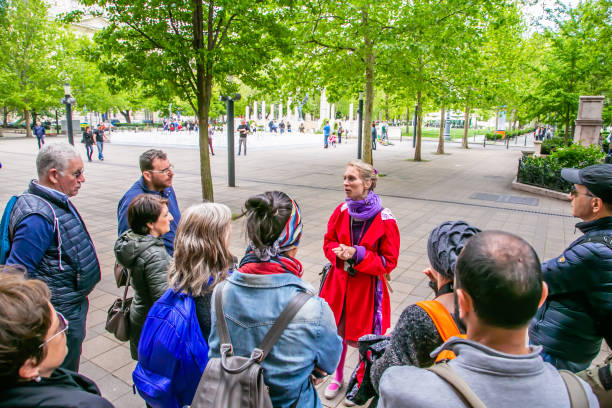
Image downloaded from iStock
Why digital guides fit today’s travel style?
Digital audio guide platforms such as SmartGuide are designed to improve the traditional large-group model, not replace the personal touch of a private guide.
For city exploration and standard sightseeing routes, a digital guide can:
-
Give travelers complete freedom: Begin whenever they like, pause at any moment, and take breaks without losing the storyline.
-
Match each visitor’s rhythm: Linger at favorite landmarks or quickly move past stops that don’t appeal.
-
Support multiple languages simultaneously: A mixed group of friends can each listen in their own language.
-
Deliver clear, consistent audio: No distorted sound, weak signals, or equipment issues.
-
Ease congestion: Visitors are spread over time and space instead of moving in a dense group.
-
Personalize content with AI: Highlight art for one visitor, food for another, or kid-friendly stories for families.
For introductory walks or well-known routes followed by most tour groups, a digital guide can offer a journey that is often eco-friendly and more sustainable, more comfortable, and adaptable than a standard group tour.
This shift also benefits live guides. They are no longer tied to repetitive routes and can focus on creative, higher-value adventures that only humans can provide.
The structural problem behind guide burnout - No passive income, no scalability
The main pressure on live guides doesn’t come from technology, but from the structure of the job itself. Here is how:
- Earnings stop the moment the guide stops working.
- There’s no way to grow beyond the hours they can physically lead tours.
- Income rises and falls with the tourism season.
- To boost revenue, guides often need to accept larger groups, which usually harms the overall experience.
This model leaves little space for rest, creativity, or long-term planning. Many gifted guides eventually feel exhausted or forced to step back from the field simply because the work cannot grow with them.
Digital guides change this situation completely. Instead of trading time for money, guides can create a tour once and keep earning whenever travelers enjoy it, even while they sleep, travel, or work on new ideas.

AI-generated image
How can guides grow their reach with SmartGuide?
AI-powered digital audio guide platforms such as SmartGuide give tour guides a way to bottle their knowledge and storytelling into a digital version of themselves — one that can guide travelers when they’re not physically present.
Guides can create their digital clone by:
- Recording their stories in their own voice.
- Structuring the route and adding side notes, tips, fun facts, and deeper layers of context.
- Selecting photos, recommendations, and adding hidden gems.
- Turning everything into a multilingual tour supported by SmartGuide’s translation tools (30+ languages available).
- Using optional AI assistance for personalization, recommendations, and Q&A, while keeping full control over every detail.
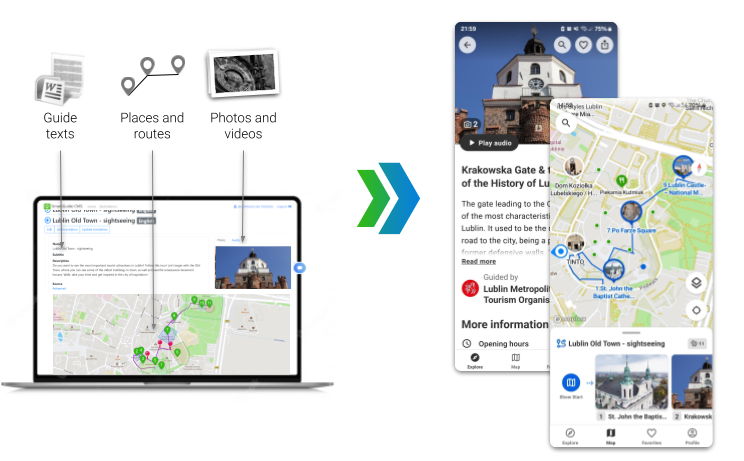 Creating a digital guide in SmartGuide's content management system
Once a digital tour is ready, it can start earning repeatedly:
- Travelers can use it whenever the guide’s schedule is full.
- Guides no longer need to turn away guests they cannot accommodate in person (due to capacity or language limitations).
- It can be offered as a self-guided option before or after a shorter live tour.
Since each SmartGuide tour can be private and sold only to the guide’s own customers, they can keep around 90% of the revenue, turning their expertise into a scalable product, not just a service.
It allows guides to:
- Invest time in the off-season to build their digital clone.
- Create a steady, recurring income stream that is not tied to their physical availability.
- Preserve their storytelling style while making it accessible to travelers from around the world.
For more information, watch the video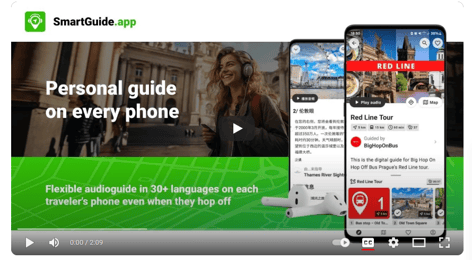
Furthermore, SmartGuide AI, a specially trained model based on GPT-5, takes a leading role in creating truly original and engaging content. Using sophisticated large language models, SmartGuide AI can create humorous, fact-checked, and engaging content about all kinds of places, from renowned tourist attractions to hidden treasures.
The sole fact of hosting travel guide content on a digital guide platform brings additional advantages, including no hardware headaches, 24/7 availability, and min. guaranteed 5-year maintenance.
Essentially, SmartGuide extends live guides' presence instead of replacing them, allowing travelers to enjoy their guidance anytime, whether the guide is working, resting, or focusing on new ideas. It lets guides scale their expertise beyond in-person tours, earn passive income from their stories, and offer personalized, multilingual tours that complement small-group.
Why will human guides always matter?
Live guides remain irreplaceable in many situations where human presence, intuition, and emotional connection matter most. High-end private tours, for example, rely on a personal host who can read guest preferences, customize the experience on the spot, and hold meaningful conversations. Outdoor and wildlife adventures also depend heavily on expert guides who ensure safety, help guests navigate nature, and interpret signs that technology simply cannot read in real time.
There are also cultural contexts where sensitivity, nuance, and dialogue are essential. Travelers may need explanations shaped to their background, perspective, or beliefs, something only a human can adapt instantly. Educational travel thrives on discussion, reflection, and shared understanding, which naturally requires a live guide’s leadership.
In all these scenarios, digital guides and AI still play a strong supporting role. They help visitors prepare in advance, so precious live time is spent more meaningfully. They can offer extra background, visuals, or multilingual content during the tour, and even act as a follow-up companion after the trip for deeper exploration.
As a result, the role of the live guide evolves. Instead of memorizing scripts or repeating the same stories, guides focus on what humans uniquely do best: listening, responding, reading the room, creating shared moments, and making guests feel safe, welcome, and inspired. This human side of guiding is not just protected from AI; it’s becoming more valuable than ever.
The future of guiding - Humans and AI side by side
Will AI-powered digital guides replace live guides? Not entirely. They are set to replace the repetitive, scripted, headset-based tours for oversized groups, making these tours more flexible, manageable, and considerate of local spaces. Digital guides also open new opportunities for guides and operators to offer multilingual, scalable tours available around the clock, based on their own content.
Guides who adopt this approach and create digital versions of their tours can earn both per hour and per download, reach more visitors while managing smaller groups, and spend more time on what matters most: connecting personally with guests. The future is not AI versus live guides; it is AI-assisted guides and live guides working together, each focusing on what they do best.
FAQ: AI-powered digital guides vs live guides
1) Will AI completely replace tour guides?
No. AI and digital guides will replace mainly large group, scripted tours, not high-touch personal experiences. The guides who focus on human interaction and use digital tools to scale will thrive.
2) Are audio guide apps better than traditional group tours?
For standard sightseeing routes, many travelers prefer self-guided tours: flexible timing, their own pace, more languages, and no crowding. For deep, interactive tours, a good live guide is still unbeatable.
3) How can guides earn passive income from digital guides?
By creating a digital clone of their tour on SmartGuide, guides can sell access to their content to visitors even when they’re not physically present, keeping around 90% of the revenue and earning year-round.
4) Do digital guides have to use AI content?
No. SmartGuide supports 100% human content (text, audio, and curation). AI can be added on top for translation and personalization, but it’s entirely optional. If you’re a guide or tour operator and you’d like to explore how a digital clone of your tours could work, from private content to city-wide experiences, you can:
- Add a self-guided SmartGuide option alongside your tours.
- Keep your premium live experiences, enhanced by better-prepared guests.
- Build a scalable, multilingual income stream from your existing expertise.
AI won’t replace great guides; however, those who use AI-powered platforms like SmartGuide may gain a notable advantage over those who don’t.
Ready to take your guiding to the next level? Start creating your digital tours with SmartGuide today and reach travelers anytime, anywhere.
.jpeg?height=200&name=pexels-andreea-ch-1369212%20(2).jpeg)